What to notice on your first run
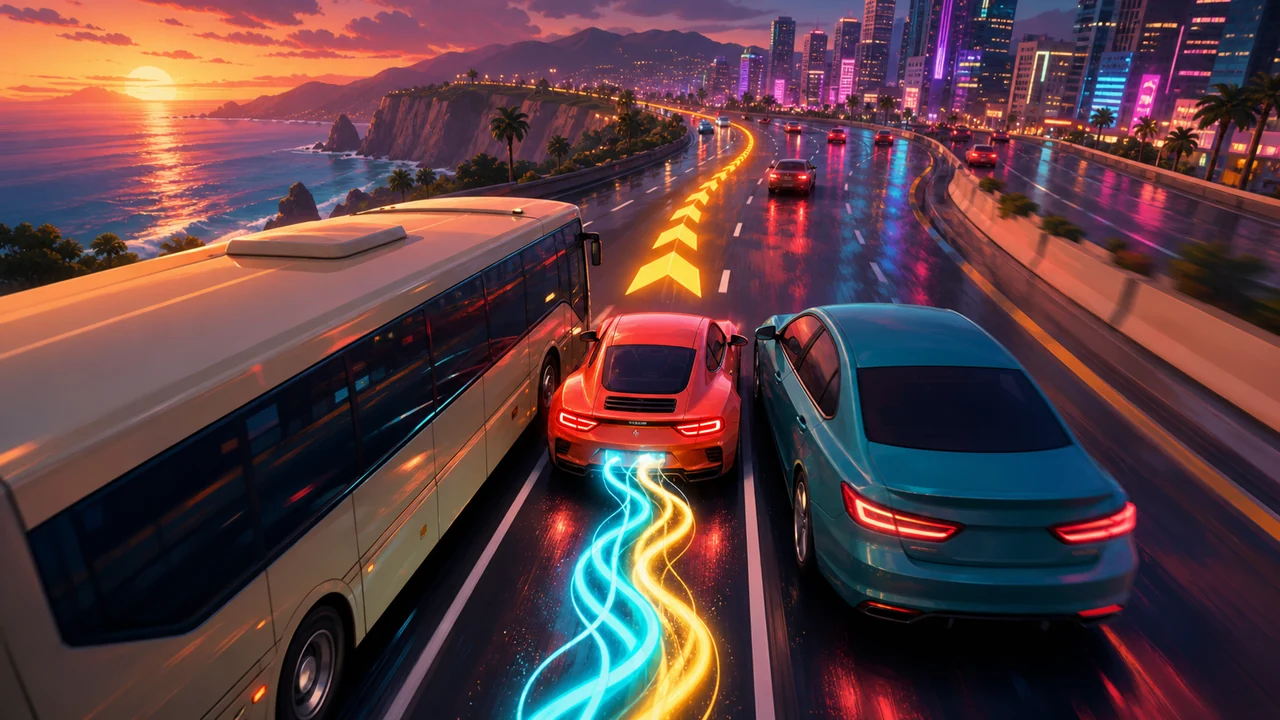
Traffic is designed to be read rather than guessed. Cars that are about to change lanes show an amber warning for at least 450 milliseconds before they move, so the best line is often the gap that will still exist half a second later. Near misses happen only when you pass close without overlapping a vehicle, which means the combo rewards controlled risk instead of random weaving.
Flowline adds a second decision without changing steering or collision rules. A clean close pass establishes a side. Reach the next safe gap on the opposite side before the combo window closes to add a braid segment. Three alternating segments raise the Flowline score tier; repeating the same side can preserve combo, but it does not grow the braid.
Why this mechanic works in a short session
The car handles one decision continuously—horizontal position—while speed, traffic density, route events and score pressure create the rest of the challenge. Coast, City Works, Canyon Storm and Neon Night use layered 2.5D art while the deterministic Canvas simulation remains lightweight. A crash gives a clear run report with distance, peak Flowline, best combo and closest pass, and another run starts without setup.
Sixty fixed mission identities rotate through twenty objective templates. Endless mode changes biomes on a deterministic route and records a separate best score. Garage vehicles are cosmetic: selecting a different silhouette never changes steering authority, traffic, hitbox, speed or score.
Practice near misses without guessing
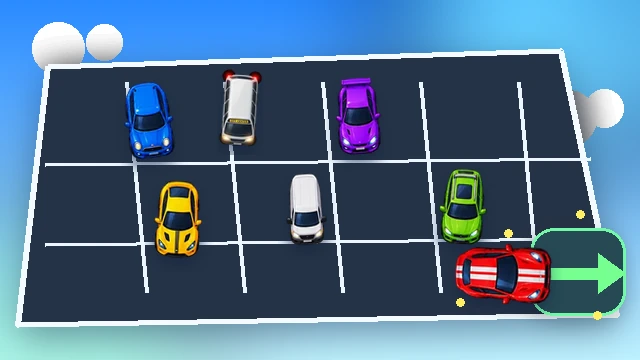
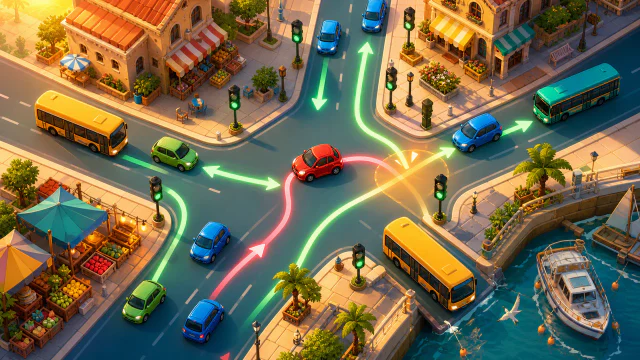
The Highway Rush near-miss strategy guide separates traffic reading, small steering corrections, and Flowline alternation into a three-run practice routine. For traffic decisions without continuous steering, compare Traffic Tangle and Parking Escape in the traffic puzzle collection.